

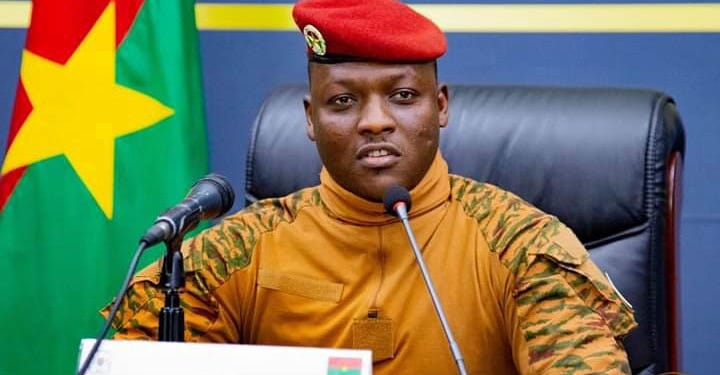
Captain Ibrahim Traore Highlights African Liberation Day
As Caribbean leaders and newspapers lay low

I wonder how many people in the Caribbean are aware that this past weekend, on May 25th, was celebration of African Liberation Day?
My research of most online editions of mainstream newspapers indicate hardly a mention of the day. There were no editorials recognizing the 62nd anniversary of the signing of the charter of the Organization of African Unity (OAU), now called the African Union.
Some governments did the formalities. On 16th May the Legislature of the Virgin Islands, hosted the annual African Liberation Day ceremony in the Legislative Hall, They celebrated a law they passed that proclaims the third week in May as African Heritage Week and 25th day in May as African Liberation Day. Also the Virgin Islands Department of Education used a Facebook post to encourage teachers to organize some instructional activity as part of the week.
In Grenada, the Rastafari Organisation for Centralisation, in collaboration with the Ministry of Tourism, Creative Economy and Culture, organized a sacred commemoration of African Liberation Day 2 in St George’s.
Despite the formalities by some Caribbean governments there is little evidence that African Liberation Day has any organic significance to the man on the street compared to most other public holidays. This is despite the historic significance of the OAU whose main purposes include the promotion of the unity and solidarity of African states; defense of their sovereignty, territorial integrity, and independence; and the eradication of all forms of colonialism from Africa.
Almost all the great freedom fighters from the Caribbean such as Marcus Garvey, George Padmore and Edward Wilmoth Blyden understood that without freedom of Africa, the people in the African diaspora would never be free.
Similarly our greatest reggae icons cared greatly about Africa Liberation. No wonder that great speech of Haile Selassie made to the United Nations on 4 October 1963 in honor of the OAU, has been immortalized in song by Bob Marley:
“….that until the philosophy which holds one race superior and another inferior is finally and permanently dicredited and abandoned;
that until there are no longer first class and second class citizens of any nation;
that until the colour of a man's skin is of no more significance than the colour of his eyes;
that until the basic human rights are equally guaranteed to all, without regard to race;
that until that day, the dream of lasting peace and world citizenship and the rule of international morality will remain but fleeting illusions, to be pursued but never attained.”
Unlike their compatriots in the Caribbean diaspora, the people of Africa had massive celebrations of what is now called Africa Day. I think Liberation Day is more appropriate as most of Africa may be politically independent but they are still enslaved by the imperialist chains of neo-colonialism. Chattel slavery is still rife in Libya after the overthrow of Ghaddafi, Africans are still held in concentration camps in Morocco to prevent their flight to Europe as they seek to escape poverty at home and much of sub-Saharan Africa are some of the poorest countries in the world after the French plundered their natural resources up to recently.
Because they slavishly follow western news agencies, the Caribbean press has provided little reportage of the Africa Day celebrations in throughout the continent.
Continent-Wide Celebrations:
Across Africa, from Accra to Johannesburg and Nairobi to Dar es Salaam, African Liberation Day 2025 featured marches, music, panels, and declarations showcasing anti-imperialist sentiments and cultural pride. The Socialist Movement of Ghana issued a statement rejecting the notion that Africa’s global economic position is fixed, calling for dismantling debt-servitude mechanisms and promoting people-centered development. The events underscored a renewed commitment to a united, sovereign Africa.
Uganda’s Commemoration:
Uganda hosted significant celebrations at Kololo Independence Grounds, themed “Africa for Africans: Revolutionary Pan-Africanist Unity Across Borders in the Battle for Socialism against Imperialism.” The event, officiated by President Museveni, drew royal dignitaries, cultural leaders, and diaspora members. Activities included debates, cultural performances, keynote speeches, exhibitions, and a solidarity march, emphasizing Africa’s cultural and political autonomy. Queen Grace Eganda from the UK highlighted unity as key to addressing challenges like youth unemployment and climate change, while Chief Patterson Bent Edwin Deive from Costa Rica stressed regional cooperation.
Zambia’s Focus:
Zambian President Hakainde Hichilema attended Africa Day events in Lusaka, urging pan-African unity. The commemoration included military participation and highlighted the continent’s shared goals for progress.
I however noticed that little has been reported on the march in Ghana on Africa Day Under the theme “Walk with Ibrahim Traoré: Africa Must Unite”. At the event Ghanaians rallied in Accra to support Burkina Faso’s President Ibrahim Traoré, to resist foreign influence and promote Pan-African solidarity. This peaceful protest sent a clear message: Africans must stand together for freedom, sovereignty, and true independence.
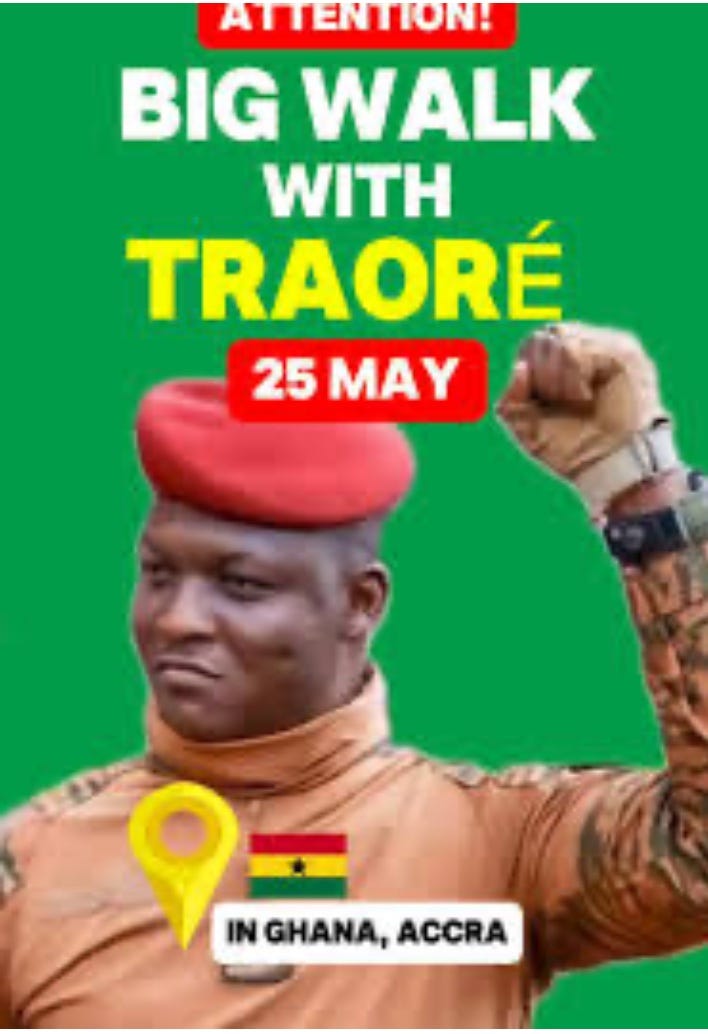
Among the many participants were not only Africans but also Jamaicans and others from the diaspora. living in Ghana, who stridently expressed their admiration for the Traore and for his struggle to rescue his country from poverty and oppression and the schemes of western countries seeking his overthrow. This YouTube video gives a feel of the spirit and message of the participants.
Within the Caribbean itself Trinidad and Tobago nationals joined the worldwide Solidarity March in support of Burkina Faso leader on African Liberation Day.
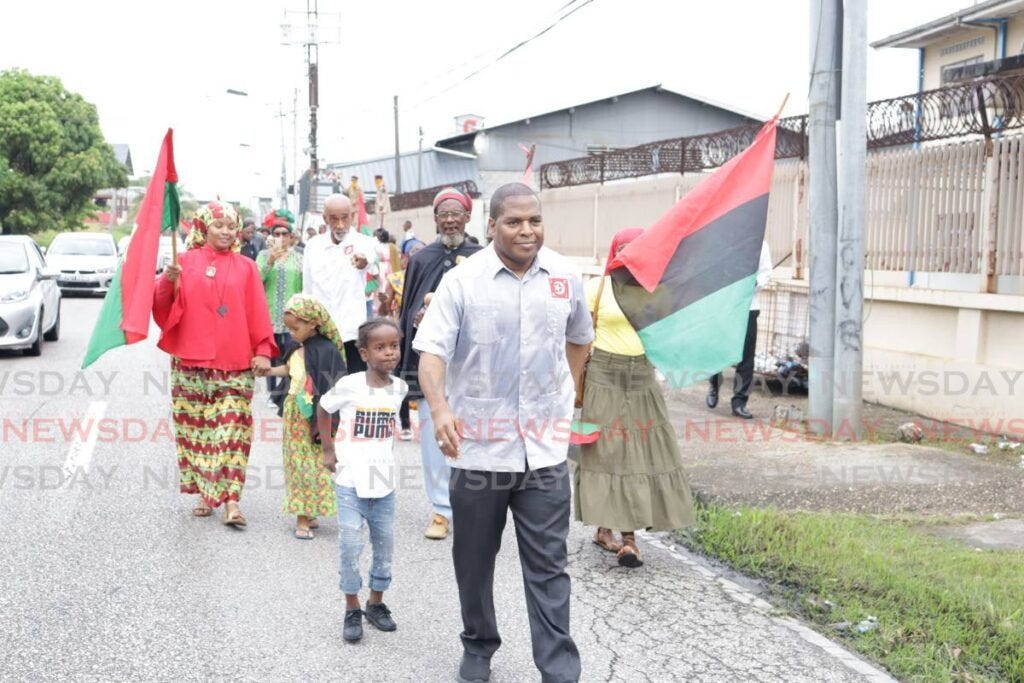
According to the report by Newsday quoting Black Agenda Project director Roxanne Muhammad:
“The solidarity march is in support of what is happening on the (African) continent, that desire to want to stand up and be independent. Our patrons asked for the march and we decided to have it after the conference to support the changes being made by Traore to his country and other African nations who are ousting their colonisers."
Unlike unlike our bog-standard Caribbean politician and many of those black people who now “profile” in Caribbean high society, the masses of people of Caribbean admire Captain Traore for what he represents as a fighter for African independence and freedom from western domination.
Not a day passes that I am not in receipt of either a YouTube or WhatsApp video proclaiming the greatness of this young, leader who kicked the French out of Burkina Faso, took over the valuable gold mines they owned and controlled and is now using these resources to develop one of the poorest countries in the world.
Never forget that prior to Ibrahim Traore and to this day more than 40% of the population of Burkina Faso lives below the national poverty line. According to the 2023–2024 Human Development Index (HDI) report published by the United Nations Development Program (UNDP), Burkina Faso ranked 185th out of 193 countries. The only Caribbean country that comes even close is Haiti with a poverty rate of 58.5% in 2012. Incidentally US Marines acting on behalf of National City Bank and other American business interests) seized Haiti’s gold reserves in 1914, from which the country has never recovered.
As expected, the traditional newspapers, tv and radio station throughout the Caribbean, which are mostly owned and controlled by the wealthy “fair-skinned” elite, have ignored Ibrahim Traore, apparently in the hope that his influence won’t spread to the region. But the internet is stronger than their censorship.
Every now and then there is a Letter to the Editor or article which demonstrate “they can fool some people some time, but they can’t fool all the people all the time”.
Take this letter to the editor of the Trinidad Express newspaper by La Toya De Four Cunupia dated May 12, 2005.
“At just 36 years old, Captain Ibrahim Traoré, the President of Burkina Faso, is redefining leadership across Africa. He is not focused on power or popularity, he is focused on people. Since taking office, Traoré has prioritised the basic needs of his citizens, building hospitals, improving infrastructure, and placing national development above personal gain.
“This is the kind of leadership the Caribbean desperately needs.
“As a region, we share common histories and struggles, yet we remain divided in vision and direction. While Traoré leads with conviction and courage, many of our Caribbean leaders continue to play politics, focused more on re-election than real reform.
“We have no real language barrier across most of the Caribbean, aside from some Latin-based territories. What holds us back is not communication, but commitment. We lack unity. We lack bold leadership. And far too often, we lack pride in ourselves as Caribbean people.”
This letter beautifully explains how Ibrahim Traore embodies the hopes and aspirations of the majority Afro-Caribbean peoples. Is it any wonder our leaders seem to be staying as far as they can from African Liberation Day.